
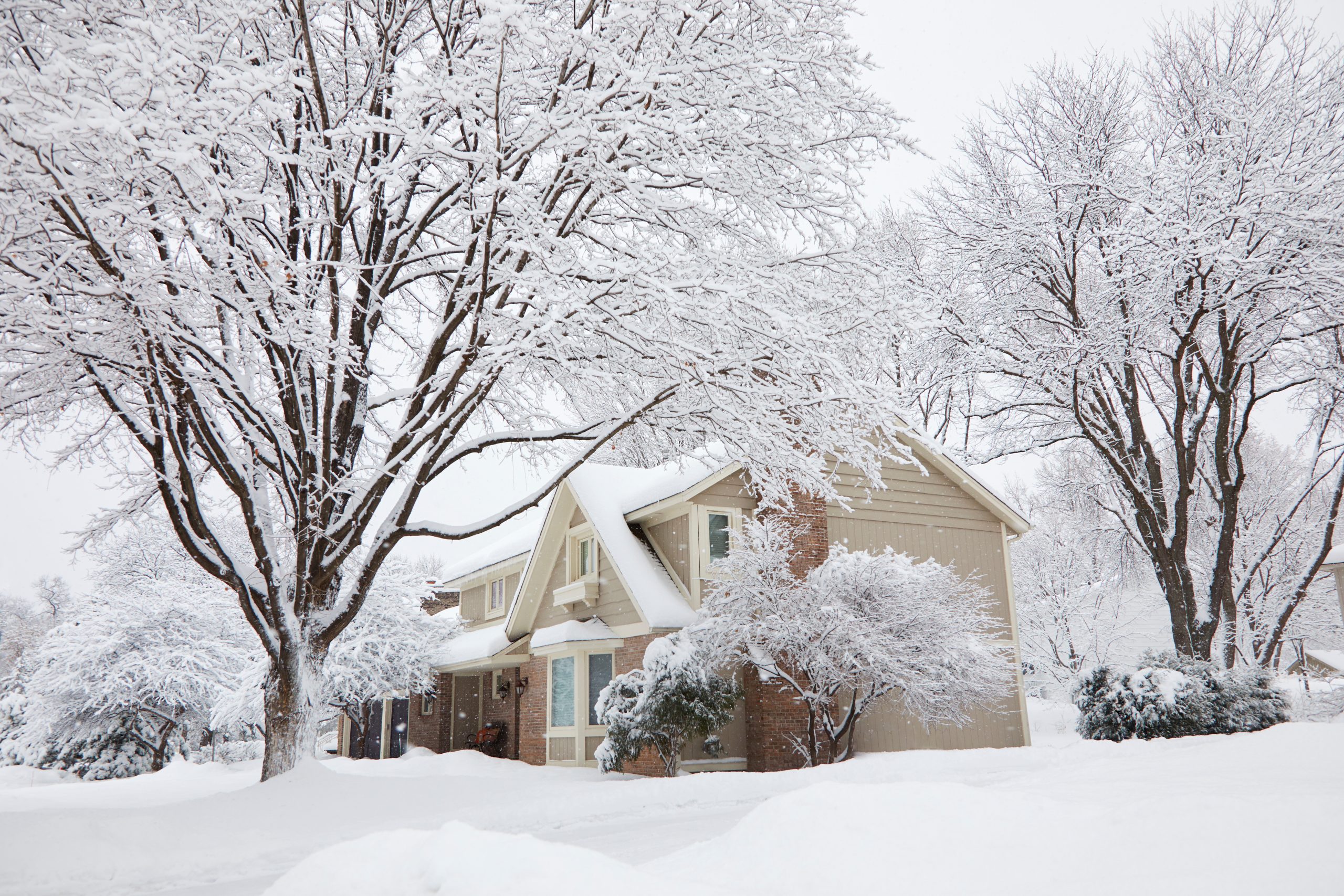
When the weather turns cold across Middle Tennessee, Southern Kentucky, and North Alabama, homes get closed up tight, and the furnace starts running. Those seasonal changes can affect more than your utility bills. They can also change how much radon builds up indoors, which is why so many homeowners ask about radon testing once winter arrives.
A common version of the question is whether snow or freezing temperatures make radon worse. Here is what the research and the guidance from health agencies say, and what it means for your home.
Do Radon Levels Go Up in the Winter?
In many homes, yes. Indoor radon levels tend to run higher during the heating season than during warmer months. The U.S. Environmental Protection Agency notes in A Citizen’s Guide to Radon that radon levels tend to vary from day to day and season to season. Health Canada’s measurement guidance goes a step further, stating that higher radon levels are usually observed during the winter months, when houses are sealed up.
That does not mean every home will see a big jump, or that a home with low levels in summer will automatically test high in January. It means winter conditions often push indoor levels toward the higher end of a home’s normal range.
Why Does Cold Weather Pull More Radon Into a Home?
Radon is a naturally occurring gas that comes from the breakdown of uranium in soil and rock. It moves up through the ground and can enter a home through cracks in floors and walls, construction joints, gaps around service pipes, and other openings in the foundation. A few winter factors help draw more of it inside:
The Stack Effect
Warm indoor air rises and escapes through upper levels, creating a slight vacuum at the lowest level that pulls in soil gas from below.
Closed Windows and Doors
With the house sealed against the cold, there is less fresh air to dilute radon that has already entered.
Exhaust Appliances
Furnaces, fireplaces, dryers, and exhaust fans move air out of the home, and replacement air can be drawn up from the soil.
Health Canada describes the thermal stack effect as generally strongest during the heating season, which is one reason it recommends testing during that time of year.
Does Snow or Frozen Ground Make Radon Worse?
Snow itself does not create radon, but a covering of snow, ice, or frozen and saturated soil can make it harder for soil gas to escape through the ground surface outdoors. When that happens, more of the gas may find the easier path into your home through the foundation.
Here in Middle Tennessee, lasting snow cover is not an everyday event, so the bigger winter factor for most local homes is the heating season itself. Even without snow on the ground, closed-up houses and running furnaces can raise indoor radon levels. Certified Radon Systems in New York also explains the role of frozen and snow-covered ground during winter radon testing for homes in a much snowier climate.
What Radon Level Should Prompt Action?
The EPA recommends fixing your home if your radon level is 4.0 picocuries per liter (pCi/L) or higher, and suggests considering mitigation for levels between 2.0 and 4.0 pCi/L. The World Health Organization recommends a reference level of 100 becquerels per cubic meter, which is about 2.7 pCi/L.
Radon is a long-term health risk, not an emergency. A higher winter reading is a reason to gather good data and make a plan, not a reason to panic.
Is Winter a Good Time to Test for Radon?
Winter is one of the best times to test. Because levels are often higher, a winter test gives you a clear look at your home under the conditions most likely to raise radon. The EPA’s short-term testing guidance already calls for closed-house conditions, including keeping windows and outside doors closed for at least 12 hours before and during a 2- to 3-day test, and winter makes those conditions easy to maintain.
For the most accurate results, place the test in the lowest lived-in level of the home, in a room you use regularly. Avoid kitchens, bathrooms, and spots near drafts. Colorado Radon Company’s guide to seasonal radon testing offers another helpful look at how summer and winter results can differ.
Get Clear Answers About Your Home’s Radon Levels
Our NRPP-certified team uses Continuous Radon Monitors and provides detailed, hour-by-hour reports.
Schedule Your Radon TestShould I Retest If My Summer Test Came Back Low?
It is a reasonable step, especially if your earlier result was close to 4.0 pCi/L or if the test was done with windows open or during unusual weather. Since radon changes from season to season, a single short-term result is a snapshot rather than a year-round average.
Tennessee Radon Services offers both short-term testing (2 to 7 days) and long-term testing (90 to 365 days). Our professional tests use EPA-approved Continuous Radon Monitors (CRMs), which record radon levels hour by hour. A long-term test that runs through the colder months, or a winter CRM test compared against an earlier summer result, gives you a better picture of what your family is actually breathing over time.
Does a Radon Mitigation System Still Work in the Winter?
Yes. A properly designed radon mitigation system runs year-round, using a continuously operating fan to draw radon from beneath the home and vent it safely above the roofline. In fact, winter is when a working system is doing some of its most important work.
The EPA notes that the fan should never be turned off, because the system must run continuously to work correctly. If you notice a change in the system’s pressure gauge, new or unusual fan noise, or a fan that has stopped running, those are signs it may be time for radon system repair. Our service plans are designed to help keep mitigation systems operating at peak performance.
Should I Retest My Home After Mitigation?
Yes. Tennessee Radon Services retests after mitigation to confirm the system has reduced radon levels, and the EPA recommends retesting your home at least every two years to make sure radon levels remain low. You should also retest after major renovations or changes to your heating and cooling system, since those can affect airflow in the home.
If you have questions about winter radon levels, testing, or your current system, call or text us at (615) 788-3343 or contact Tennessee Radon Services online. We are glad to help you understand your results and your options.